




Best Orthopaedic Mattress UK: What the Label Doesn't Tell You
An orthopaedic mattress is a firm mattress with a marketing label on it. There is no British standard, no medical certification and no regulator checking the word. What matters is whether the mattress keeps your spine neutral, and for most bad backs that means medium-firm with proper support, not the hardest slab in the shop.
This matters because people with back pain tend to buy the firmest mattress they can find, then discover that a hard surface creates new pressure points at the shoulder and hip while doing nothing for the lower back. The mattress that helps is the one that supports the waist without turning your shoulder into a pivot.
We sell mattresses to people who have already tried the wrong one, so the advice below is aimed at not repeating that purchase.
What "orthopaedic" actually means in the UK
Nothing official. The term is used loosely to mean extra firm, and any manufacturer can put it on a label. Some orthopaedic mattresses are genuinely supportive. Others are a cheap open coil unit with a hard top layer and a word printed on the box.
You will also see "ortho", "back care", "posture support" and "medical grade". All of them are marketing. None of them tell you the spring count, the foam density or whether the mattress will still be supportive in five years.
Firm and supportive are not the same thing
Support is about holding your body in line. Firmness is about how hard the surface feels. A mattress can be very firm and badly supportive, which is exactly what a cheap orthopaedic slab is: hard on the surface, with a thin layer of cheap foam over springs that collapse in the middle.
The opposite also exists. A soft mattress can be supportive if the support layer underneath is properly built, which is why a good hybrid feels soft at the shoulder and firm at the waist. That difference is called zoning, and it is the thing worth paying for.
| What you feel | What it means | Does it help a bad back? |
|---|---|---|
| Hard surface, no give | High firmness, low pressure relief | Rarely. Creates shoulder and hip pressure |
| Soft, sinks in the middle | Low support, comfort layer too thick | No. The waist drops and the spine curves |
| Firm at the waist, softer at shoulder and hip | Zoned support | Yes, this is the one most people need |
Which firmness suits which back problem?
Lower back pain is the most common reason people search for an orthopaedic mattress, and the honest answer is that medium-firm tends to work better than extra firm. A mattress that is too hard stops the hips and shoulders sinking, which pushes the lower back into an arch. A mattress that is too soft lets the hips drop, which flattens the curve the other way.
If you sleep on your back, medium-firm is usually right. On your side, medium-firm with more give at the shoulder. On your stomach, slightly firmer, because the hips need to stay level with the shoulders rather than sinking.
If a clinician has told you to sleep on a firm surface after surgery or a fracture, follow that advice rather than this article. A mattress is not a treatment, and the specific instruction from your consultant beats any general rule about firmness.
What to look for on the label
Ignore the word orthopaedic and read four numbers instead.
- Spring count. In a king size, 1,000 pocket springs is a reasonable baseline. Below 600 and the support is coarse, with fewer points of contact.
- Wire gauge. Thicker wire means firmer. 12.5 gauge is firm, 13.5 is softer. Two mattresses with the same spring count can feel completely different because of this.
- Foam density. For the support layer, 50kg per cubic metre or higher. Cheap foam at 25kg starts to soften within a year.
- Depth. 25 to 30cm gives enough room for a comfort layer over a support layer. Under 20cm, you are mostly feeling the springs.
If a listing does not give you these numbers, that tells you something too. A manufacturer proud of the build usually prints it.
Pocket sprung or foam for back support?
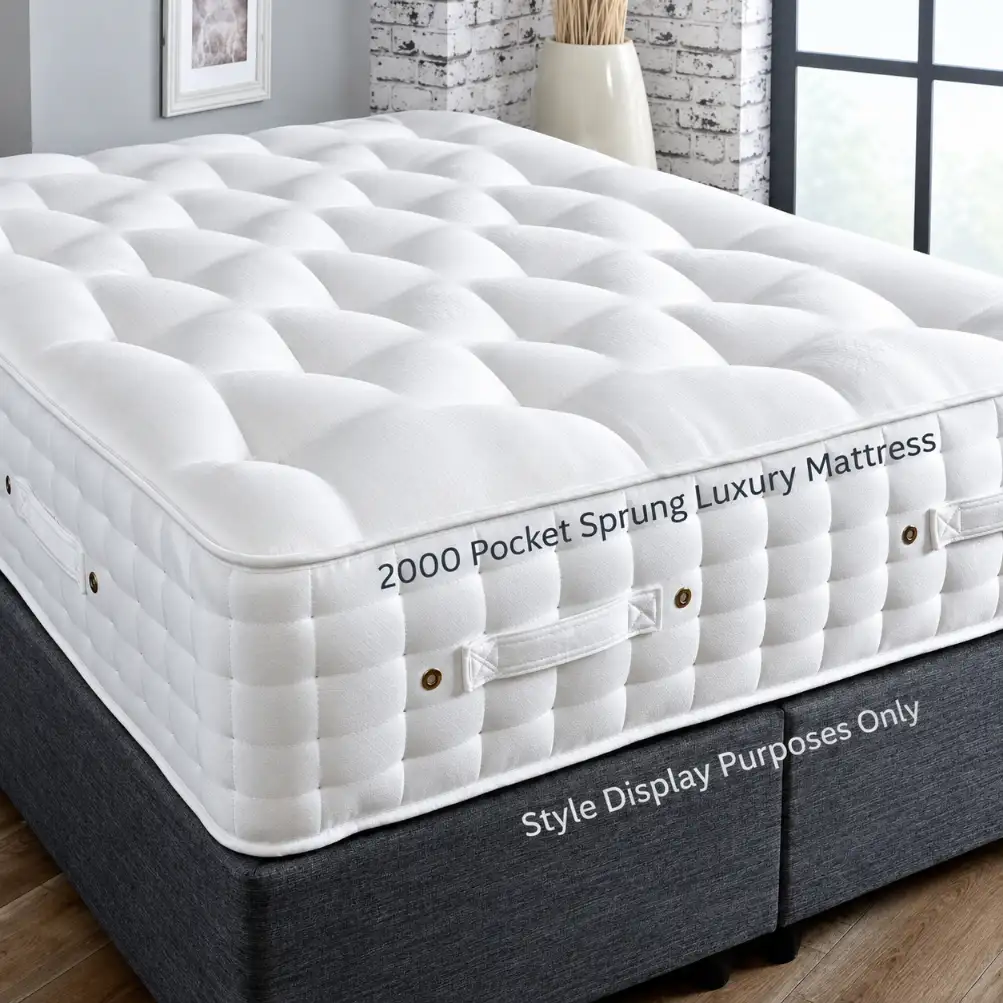
Pocket sprung is the safer choice for most bad backs. The springs move independently, so the shoulder can sink while the waist stays up, and the mattress tends to last longer before developing a dip. Foam can work well, but cheap foam softens unevenly, and the middle of the bed is usually the first place to go.
Hybrids, which put a foam comfort layer over pocket springs, are the middle ground and probably the most popular choice for back pain. You get pressure relief on top and spring support underneath. The trade-off is weight and price.
Do you need a firm mattress after surgery?
Only if you have been told to. "Firm" is often repeated after back surgery because it sounds protective, but the evidence is not that simple, and a very firm mattress can be uncomfortable enough to disturb sleep, which slows recovery rather than helping it.
What usually helps after surgery is a mattress you can get in and out of easily. That means the right height, roughly knee height at the top of the mattress, and a firm edge so you can push up on it. A mattress that is 65cm high and very soft at the edge is hard work when your movement is limited.
How much should you pay?
Expect £250 to £450 for a decent orthopaedic-style pocket sprung mattress in a double. Below £200 you are usually looking at open coil or low-density foam, and the support will not last. Above £700 you are paying for materials and finish rather than a different level of back support.
The frame matters as much as the mattress. A sagging base will undo a good mattress within a year, which is why a solid divan base or a slatted frame with close-set slats is worth checking. Our divan beds use a sprung base that spreads weight, and the ottoman beds use a solid platform.
When a mattress will not fix it
Persistent back pain that wakes you at night, travels down a leg, or comes with numbness is not a mattress problem. Neither is pain that has lasted more than a few weeks. A new mattress can make sleeping more comfortable, but it will not diagnose anything, and buying a firmer one every six months is an expensive way to avoid a conversation with a doctor.
What a mattress can do is remove one variable. If you wake with a stiff back that eases within twenty minutes of getting up, the mattress is a reasonable suspect. If the pain is there all day, it probably is not.
Common questions about orthopaedic mattresses
Is a firm mattress better for your back?
Not automatically. Medium-firm tends to suit more people with lower back pain than extra firm, because it keeps the spine level without creating pressure at the shoulder and hip.
What is the difference between orthopaedic and memory foam?
Orthopaedic describes a firmness, memory foam describes a material. You can buy a memory foam mattress that is soft, and an orthopaedic mattress that contains no foam at all.
How long does an orthopaedic mattress last?
Seven to ten years for pocket sprung, five to seven for foam. A visible dip of 2cm or a mattress that feels soft in the middle means the support layer has gone.
Do orthopaedic mattresses need a special base?
No, but they do need a flat, solid surface. A sprung divan base or close-set wooden slats work. Wide gaps between slats let the mattress sag between them, which defeats the point.
If you sleep on your side rather than your back, the side sleeper mattress guide covers the shoulder and hip side of this. For sizes, the UK bed sizes chart lists every standard measurement, and delivery is free to mainland addresses on the delivery locations page.