





Bed Headboards: Types, Heights and What Is Included
A headboard is the part of the bed you sit against, and it is usually the part that is not included. Most divan beds are sold as a base and mattress, with the headboard priced separately, which is why people discover the gap between the price they saw and the price they pay.
There are also three ways to fit one, and picking the wrong type for your base means it will not go on at all.
The three fitting types
Floor standing. The headboard has its own legs and stands behind the bed. It does not attach to the base at all, which makes it the most flexible option: it works with any divan, any frame, and it can move with you when you change bed.
Base mounted, or strutted. The headboard fixes to the divan base with two metal struts that slide into brackets. It is neater and it cannot tip, but it has to match the width of that specific base, and it cannot be reused if you change bed size.
Wall mounted. Fixed to the wall with brackets. It frees up floor space behind the bed and it is the only option if the bed sits in an alcove with a chimney breast. The downside is that it is permanent, and it needs the right wall fixing for the weight.
What height works
Measure from the floor, not from the top of the mattress.
100 to 120cm from the floor is the usual range for an upholstered headboard. That puts the top comfortably above the pillows when you are sitting up, which is the whole point.
Under 90cm and the headboard disappears behind the pillows. It still looks fine from the doorway and does nothing when you sit against it.
Over 130cm and it starts to dominate the room, particularly in a bedroom under about 10 square metres. A very tall headboard also pushes the bed further off the wall if it is floor standing, because the legs sit behind the base.
The other number that matters is depth. An upholstered headboard is 8 to 12cm deep once fitted, and a scroll or winged design adds 15 to 20cm. That comes straight off the walking gap at the foot of the bed.
The styles, and what each one does
Panel. A flat or gently shaped rectangle, usually with vertical or horizontal lines. The shallowest option at 4 to 6cm, which makes it the right choice for a small room.
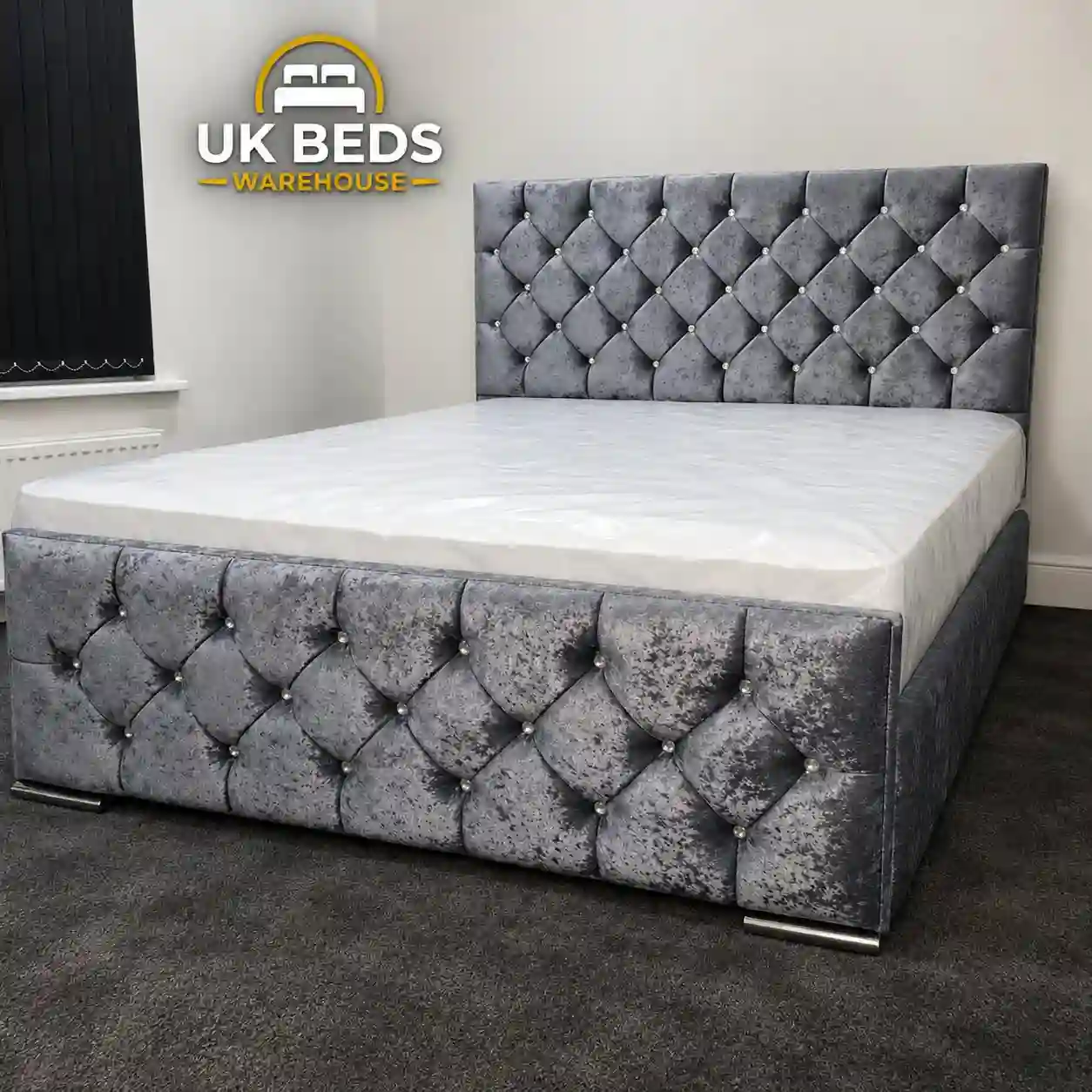
Buttoned. Diamond or square tufting. Adds depth and a traditional look, and the buttons collect dust, so it needs vacuuming with a brush attachment.
Wingback. Curved sides that wrap forward. Looks substantial and is genuinely comfortable to sit against, but the wings add 15cm of depth and they block the view across the room.
Strutted or floating. A slim panel that appears to float above the base. Modern and minimal, and it usually needs a base-mounted fitting.
Fabric, and why it matters more here than on the base
The headboard is the part of the bed you touch. It takes hair oil, hand pressure and the weight of a person leaning back, so it wears faster than the base.
Crush velvet shows hand pressure most, because the pile flattens and catches the light differently. Plush velvet is denser and recovers better. Chenille and linen blends mark less but crease more.
If the headboard is going to be leaned on daily, plush is the practical choice. If it is decorative, crush velvet looks better for longer in a room with soft lighting.
Is it included?
Three ways to check, in order of reliability.
Look at what the price is described as covering. "Divan base and mattress" means no headboard. "Divan bed set" usually means it is included.
Check the dimensions listed. If a finished width is given that is wider than the mattress, a headboard is probably part of it.
And check whether the headboard is floor standing or strutted, because that tells you whether it is a separate item or an attachment.
Our divan beds range lists the headboard options per bed so you can see the finished width and depth before ordering.
Widths, and the odd sizes
A headboard should be the same width as the bed, or slightly wider. Wider is the safer error: it frames the bed and hides the gap at the sides. Narrower looks like a mistake, because the base shows past the edges.
The complication is that a base-mounted headboard has to match the base exactly, and bases are not all the same width as the mattress. A double mattress is 135cm but a double divan base is often 140cm, so a 135cm strutted headboard will not line up.
Floor-standing headboards avoid this entirely, which is one reason they are worth the extra. They sit behind the bed rather than on it, so a 135cm headboard works with a 140cm base without a visible gap.
For an odd size, small double and super king are the two where choice thins out. If you cannot find the width you want, a floor-standing panel in the next size up is usually the practical answer. Our ottoman beds and sleigh beds ranges list the headboard options per model.
Making a modest headboard look better
Three cheap changes that make more difference than spending another £100.
Get the height right first. A headboard that is 10cm too low looks wrong no matter how good the fabric is, because it disappears behind the pillows.
Match the bedding width to the headboard, not the mattress. A duvet that overhangs by 35cm each side makes the whole bed look fuller and the headboard look wider. The mattresses page gives the depth you need for the fitted sheet to reach.
Keep the wall behind it plain. A patterned wallpaper behind a buttoned or winged headboard is too much detail in one place. Plain wall, detailed headboard, or the other way round.
Fitting a headboard to a bed you already own
If the bed is a divan, a floor-standing headboard is the safe answer. It needs no fixing and no matching width, and it sits behind the base.
If the bed is a frame, most frames have slots or brackets for a headboard, but the bolt spacing is not standardised. Our divan bed guide covers which base types take which fitting. Measure the distance between the fixing points before buying, or buy a floor-standing one and avoid the problem.
If the bed is in an alcove next to a chimney breast, a wall-mounted panel is often the only thing that fits, because a floor-standing headboard would have to sit proud of the breast.
Before you order
- Decide floor standing, strutted or wall mounted, based on the base you have.
- Check the height from the floor against the mattress top.
- Add the headboard depth to the bed length before checking the gap at the foot.
- Check whether the price includes it, and whether the struts are included too.
- For a small room, go shallow: 4 to 6cm rather than 12cm.
Delivery is free across the UK, with towns listed on the delivery areas page. A headboard is the cheapest way to change how a bed looks, and the easiest thing to get wrong on depth. Measure the gap at the foot first, then choose the style. Our guide to beds for small rooms covers the space side in more detail.